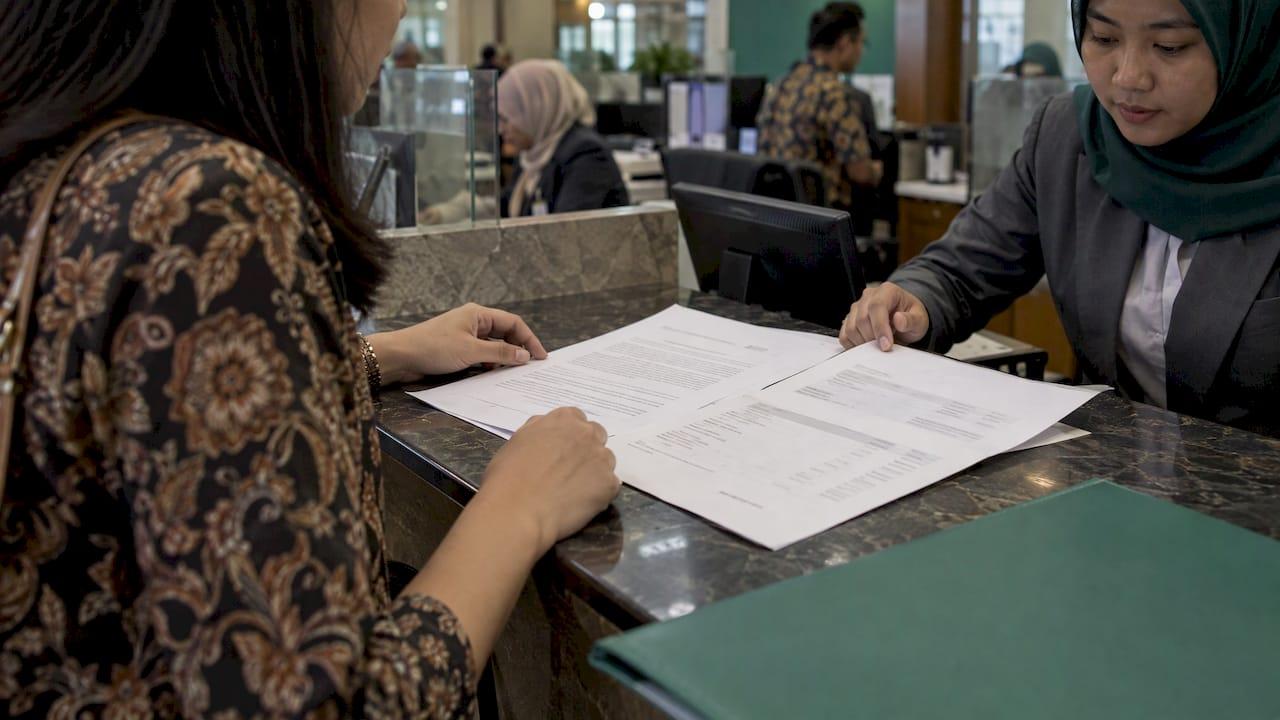
To verify an Indonesian payee from the US, confirm that the account holder name on your invoice matches the name the receiving bank has on file for that account number, and do it before you release the wire. Do not rely on a PDF invoice or an email that says "our bank details changed." A real-time name-to-account check turns a guess into a documented control. This guide covers what to collect, how to run the check, what to do when the result is not a match, and how to log it for audit.
TL;DR
- Payee verification compares the beneficiary name you hold with the name registered to the destination account, before money moves.
- Collect the full legal name, the account number, the receiving bank and the payment purpose, and keep them with the invoice.
- Treat a mismatch as a stop sign: pause, contact the supplier through a channel you already trust, and re-verify.
- Indonesian rules already require beneficiary name and account number in cross-border transfers, so clean data helps your bank and your sanctions screening.
- Vopify checks a name and account instantly, with Indonesia among the covered countries, one lookup at a time or by CSV.
Table of Contents
- What payee verification means for an Indonesian supplier
- What you need to collect before you verify
- How to verify an Indonesian payee step by step
- Which payment rails and account types are in play
- Rules that touch the payment on both sides
- What to do when the name does not match
- Fraud risks and limits finance teams should plan for
- Building the check into your AP workflow and audit trail
- What verification costs
- Verify your Indonesian payees with Vopify
- Our perspective
- FAQ
- Sources
What payee verification means for an Indonesian supplier
Payee verification, sometimes called beneficiary validation or account name matching, answers one question: does this account belong to the person or company I think I am paying? It is not a credit check or a sanctions screen. It is a narrow, fast control aimed at the most common failure in accounts payable, which is paying the wrong account because of a typo, a changed detail or a fraudster's substitution.
In Europe the idea has become a regulated service, and the Google results for this topic are full of it. In the US there is no single national equivalent that tells you who owns an overseas account, so a US company paying a vendor in Jakarta, Surabaya or Bali usually has to build the control itself. That is the gap this guide fills.
The check matters more for cross-border payments for three reasons:
- Distance. You rarely know the supplier's bank staff, and recalling a wire across time zones is slow and uncertain.
- Intermediaries. A USD payment passes through correspondent banks, each of which screens it. Wrong or inconsistent names can cause delays, not just misdirection.
- Impersonation. Fraudsters target supplier onboarding and bank-detail change requests, because one successful change redirects every later payment.
What you need to collect before you verify
The quality of the check depends on the quality of the inputs. Ask the supplier for the following, and store it in your vendor master record rather than in an email thread.
| Detail | Why it matters |
|---|---|
| Full legal name of the account holder | The name is what gets matched. Use the registered company name or the individual's full name, not a trade name or abbreviation. |
| Account number | The unique identifier of the destination account. Copy it from a bank-issued document, not retype it from memory. |
| Receiving bank name and identifier | Tells you which institution holds the account and whether it is reachable on the networks you are checking. |
| Account type | Business or individual. Matching rules and naming conventions differ between them. |
| Payment purpose and invoice reference | Cross-border rules expect context, and it helps your own audit file. |
There is a regulatory reason to be strict about this. Under Bank Indonesia Regulation 19/10/PBI/2017, cross-border fund transfers must carry, at minimum, the originator's identity, the originator's account number or a unique transaction reference, the beneficiary's name and the beneficiary's account number or a unique reference. In other words, the beneficiary name and account number are not optional extras. If your records are incomplete, your payment is more likely to be queried.
Names that cause false mismatches
Many Indonesians use a single name, and others use a short everyday name that differs from the legal one. Companies may be registered with a prefix such as PT or CV that suppliers drop on invoices. Before you treat a mismatch as fraud, compare the invoice name, the contract name and the name on the supplier's bank-issued document. Capture the legal form in your vendor record so the check starts from the right string.
How to verify an Indonesian payee step by step
Here is a workflow that a small AP team can run in a few minutes per supplier.
- Collect the details from the signed contract or onboarding form, not from an email asking for a change.
- Normalize the name. Remove stray punctuation, keep the legal form and use the spelling that appears on official documents.
- Run the name and account check. In Vopify you enter the account holder name and the account details, and the result comes back in under two seconds, according to our published performance figures. Both individual and business accounts are supported, and Indonesia is listed on our coverage page alongside SEPA countries, India, South Korea and China (Alipay).
- Read the result. A match lets the payment proceed. A close or partial match calls for a second look at spelling and legal form. A non-match stops the payment.
- Save the evidence. Attach the result, the date, the user and the invoice reference to the vendor record.
- Re-verify on change. Any new bank detail triggers a new check before the next payment, not after.
For a handful of suppliers, single lookups are enough. For a vendor master with hundreds of Indonesian and European suppliers, bulk CSV verification lets you check the whole file in one pass and sort exceptions for follow-up.
Which payment rails and account types are in play
Indonesia's payment system has several layers, and the participants are not all the same. Bank Indonesia's Board of Governors Regulation 17/2023 distinguishes direct participants, which process transactions and manage settlement liquidity themselves, from indirect participants, which process transactions directly but manage settlement liquidity through a sponsor bank. For a US payer this has a practical meaning: the institution holding your supplier's account may not be the one that settles the payment, and the more parties in the chain, the more reason to confirm the account owner before sending.
Account type also shapes the check. Individuals such as freelancers and contractors often receive payment into personal accounts, while companies use business accounts. Our service accepts both, so you can verify a freelance designer in Bandung and a manufacturing vendor in Cikarang in the same workflow.

Rules that touch the payment on both sides
Payee verification is not a legal substitute for compliance, but it supports it. A few points are worth knowing.
Indonesia. Bank Indonesia requires non-bank payment service providers to apply customer due diligence when they carry out fund transfers. According to PBI 19/10/2017, those measures include identifying the service user and the beneficial owner, verifying identity from independent and reliable sources, ongoing due diligence, and understanding the purpose and source of funds. The central bank's CDD guidelines add that electronic verification may use OTP codes, biometric technology, fraud detection technology and AI-based systems. The direction is clear: Indonesian providers are expected to verify electronically, and a US payer who verifies the payee electronically is working in the same spirit. For more on methods in this area, see this overview of contact verification security checks.
United States. FinCEN's customer due diligence rule requires covered financial institutions to identify and verify the beneficial owners of legal entity customers, defined as individuals who own 25% or more of the equity or a single individual with significant control, as summarized by the National Law Review. That rule applies to your bank, not to your AP team, but it explains why your bank may ask about the recipient of an unusual payment.
Sanctions. A USD transfer to Indonesia generally passes through a US correspondent bank. According to TraceWorthy's AML guide for Indonesian companies, that bank applies OFAC screening whatever the nationality of the parties, and a sanctions hit halts the transfer until a license is granted or the funds are returned to the sender. Name matching does not replace sanctions screening, but accurate, consistent names reduce the chance of avoidable holds.
If your company is a regulated payment provider rather than a corporate payer, your cybersecurity and compliance obligations are broader, and a managed provider offering cyber assurance services can help you map them.

What to do when the name does not match
A mismatch is information, not a verdict. Handle it in a fixed order so that nobody improvises under deadline pressure.
- Stop the payment. Do not release a partial amount or "test" with a larger transfer.
- Check for innocent causes. Typos, a missing legal form, a trade name, a transposed digit in the account number.
- Contact the supplier on a known channel. Use the phone number or contact in your contract or vendor file, never the one in the email that supplied the new details.
- Request a bank-issued document that shows the account holder name and number, such as a bank letter or statement header.
- Re-run the check with corrected data and keep both results in the file.
- Escalate if the supplier cannot explain. Involve your treasury lead or compliance officer, and consider reporting the attempt to your bank.
If a payment has already gone out to a wrong or suspicious account, contact your bank immediately. Speed matters for any recall attempt, and your bank will advise on the process for the specific route used.
Fraud risks and limits finance teams should plan for
Verification is strongest when it sits inside a set of controls rather than standing alone. Think about these patterns:
- Bank-detail change requests. A message appearing to come from a known supplier asks you to update the account. This is the classic business email compromise route. Verify every change, every time.
- Mule accounts. Fraudsters may route money through accounts opened by or borrowed from other people. A name match tells you the account belongs to the named party, so it should be paired with a check that the party is the real supplier. We cover this in our piece on mule account detection for AP teams.
- Look-alike entities. A company with a name almost identical to your supplier's. Compare names against contract records, not against the latest invoice.
- Stale data. Accounts close and suppliers change banks. Re-verify your vendor file on a schedule, for example before each annual contract renewal.
- Match is not approval. A confirmed name says nothing about whether the supplier is creditworthy, sanctioned or delivering what you ordered. Keep your normal vendor onboarding and screening steps.
For a broader look at how ownership checks compare, read our guide to bank account ownership verification methods, and for the older micro-deposit approach, see micro-deposit verification for AP teams.
Building the check into your AP workflow and audit trail
Auditors and bank partners want to see not just that you checked, but when, by whom and with what outcome. A sound record has these fields:
| Field | Example content |
|---|---|
| Vendor ID and invoice reference | Links the check to the payment |
| Name submitted and account submitted | Exactly what was checked |
| Result | Match, partial match or no match |
| Date and time, user | Who ran it and when |
| Follow-up action | Callback made, document received, escalated |
Teams that run a small volume can export or copy results from the dashboard. Teams with larger volume or an ERP want programmatic checks. API integration for high-volume verification is planned on our side, and developers can read how this works in principle in our IBAN validation API explainer. We also offer Vopify MCP, which makes verification available inside AI assistant workflows.
Whatever route you choose, put the check at two moments: when a vendor is created or its bank details change, and as a gate before the payment batch is approved. The first protects the master data, the second catches anything that slipped through. Keep the evidence for as long as your records policy requires, and ask your auditor or counsel what retention period applies to your company.
What verification costs
Cost is usually small next to a single misdirected wire. Our published pricing is $0.70 to $1.00 per verification on pay-as-you-go credits. For steady volume there are subscription plans: Starter at $240 per month, Growth at $750 per month and Scale at $2,000 per month. We do not require a contract or integration to start, so a team can begin with a few lookups from the dashboard.
Verify your Indonesian payees with Vopify
If your AP team pays suppliers in Indonesia, or in any of the other countries we cover, the fastest way to add this control is to run your next new-vendor or changed-details request through Vopify. Enter the name and account, get the result in seconds and attach it to the payment record. For a full supplier file, upload a CSV and work through the exceptions.
See plans and start verifying on vopify.io, or read about our verification of payee service to see how matching works across networks.
Our perspective
Most payment fraud does not defeat a bank's security. It persuades a person to type different account details. That is why we built Vopify around one narrow job: answering, in about two seconds, whether the name you hold belongs to the account you are about to pay.
We think finance teams should not have to sign contracts, pay platform fees or run an integration project to get that answer. A name and an account are enough to start, and the same check works whether the supplier is in Frankfurt, Mumbai or Jakarta. As rules such as the EU Instant Payments Regulation make name checks a normal part of paying, a US company that already verifies its overseas payees will be ready for counterparties who expect it.
Our advice is simple: verify at onboarding, verify on every change, and keep the result with the invoice.
David
FAQ
How can a US business verify an Indonesian payee before sending a payment?
Collect the supplier's legal name and account details from a signed document, then run a name-to-account check before the wire is released. With Vopify you can do this from the dashboard in seconds. Save the result with the invoice so you have an audit trail.
What should I do if the payee name does not match?
Stop the payment and look for simple causes such as a missing legal form or a typo. Then contact the supplier through a phone number or contact already in your file and ask for a bank-issued document showing the account holder. Re-run the check before paying.
Does a successful match mean the supplier is safe to pay?
A match confirms that the account is registered to the name you submitted. It does not assess creditworthiness, sanctions exposure or whether the goods were delivered, so keep your usual vendor onboarding and approval steps alongside it.
Can I verify many Indonesian suppliers at once?
Yes. Upload a CSV of supplier names and account details and review the results together, then follow up on the exceptions. Single lookups are available for ad hoc checks, and API integration for high-volume use is planned.
Sources
- Bank Indonesia Regulation 19/10/PBI/2017
- Bank Indonesia Board of Governors Regulation 17/2023 (PADG 17/2023)
- Bank Indonesia CDD guidelines for non-bank payment service providers
- National Law Review: FinCEN final rules for customer due diligence
- TraceWorthy: AML compliance for a PT PMA in Indonesia
- No Borders Founder: contact verification security
- Chicago Technology Group: cyber assurance services